

One of the greatest skills you can master as an actor is the art of the dramatic monologue. Good monologues capture the hearts of your audience, diving deep into the character that speaks to them and providing an almost unmatched opportunity to connect with nature and its significance to the story.
The best monologues are often some of the best-known highlights of the plays or movies they appear in, sometimes reaching an iconic status for how well a single uninterrupted flow of speech can move and enthral an audience. Indeed, there is no better way to showcase an actor's individual delivery of a dramatic role than through a good monologue.




What is a monologue?
So, what actually is a monologue in drama? Simply put, dramatic monologues are exactly what they say on the tin, when you break the word down into two parts. Mono from the Greek monos meaning alone, and logue from the Greek logos meaning speech.
So, quite literally, in drama monologues are someone speaking as the only speaker. Importantly, there is some other clarification in terms of what's a monologue and what's a soliloquy.
As for something to qualify as a monologue it must be a speech directed at someone, rather than a soliloquy which is just someone speaking on their own to convey their thoughts out loud to the audience.
What name is given to a comment said to the audience that is not heard by characters?
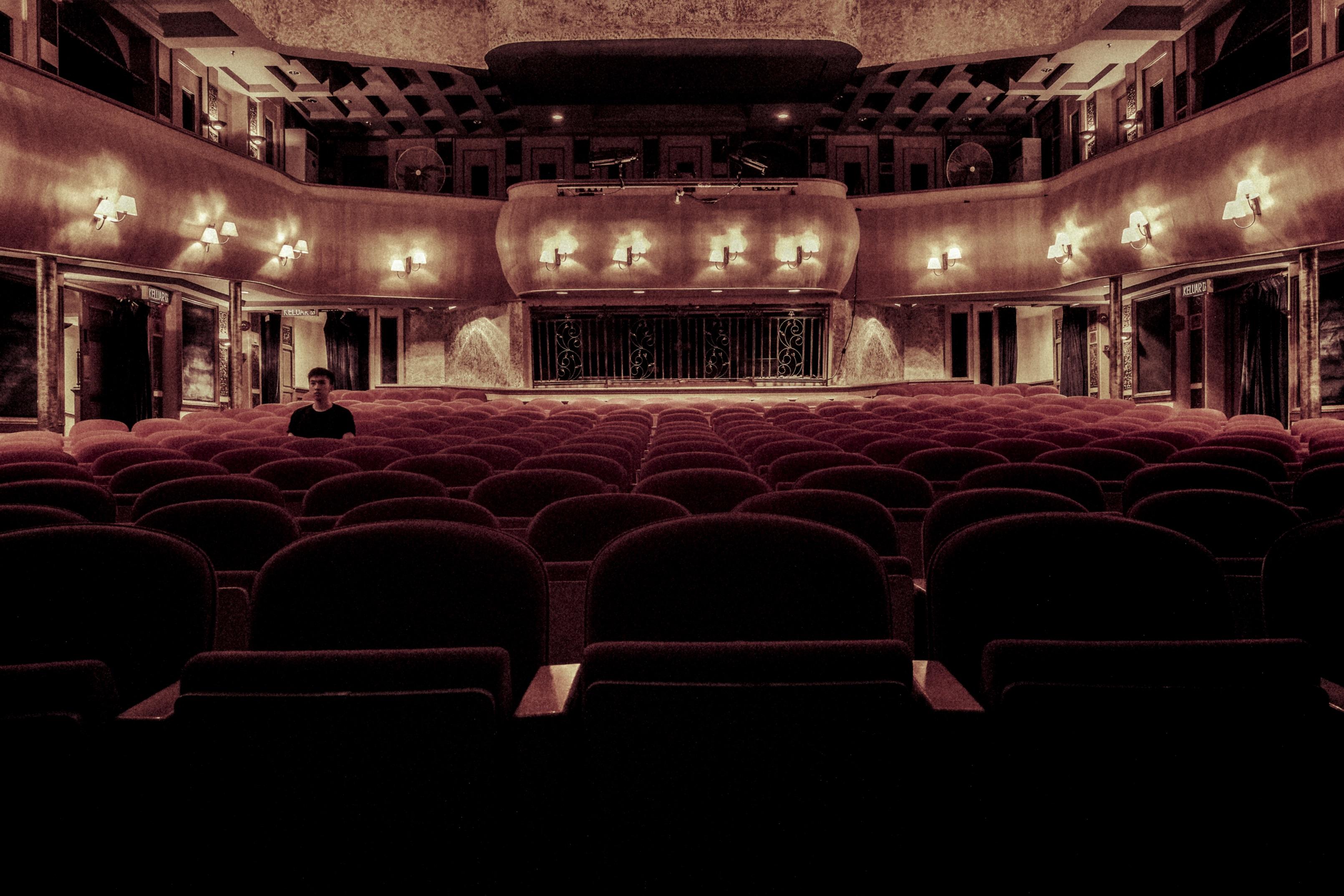
A lot of people think this is a monologue, or at least a subset of it, but this is in fact what is typically referred to in drama as a soliloquy.
The distinction between what's a monologue and what's a soliloquy comes down entirely to whether or not there is another character on stage or in shot who can hear the speech.
As soon as the speech becomes directed at another character within the story rather than addressed directly to the audience, it becomes a monologue as opposed to a soliloquy.
What are some famous monologues from plays?
Theatrical drama tends to be a source of some of the most popular monologues in culture. With the monologues from famous plays such as those in Shakespeare's 'Henry V' and 'Macbeth' being some of the theatre monologues still referenced and revered to this day as some of the finest moments in these already all-time classic plays.
They are often the defining and most memorable moments of their respective plays, and nobody showed this better than the bard himself. His plays are full of monologues, so much so that you will likely find any list of GCSE drama monologues or A level drama monologues will be dominated by Shakespeare's work, and with good reason. They're hard not to be moved by.
The As You Like It monologue by Jaques is a personal favourite, and one I would heartily recommend to anyone looking for a wonderful classical example.
What are some famous monologues from plays other than Shakespeare?

Of course, we all know that the bard was not the only person to write good monologues for his stage plays. It would be unfair to the many great scriptwriters who have produced some of the other most iconic works of stagecraft and speech.
Classic examples such as the Things I Know to be True monologue and the People, Places and Things monologue both take centre stage both figuratively and literally in their respective works.
They serve as some more recent monologue examples to show the power and impact of a single character taking time to properly speak.
What are some of the best film monologues?
With the advent of modern media, it was inevitable that a great number of monologues would also be written for the silver screen. There are probably even more of these that are well known in modern popular culture, and with good reason.
As many have, film monologues gained notoriety and cultural significance as instant classics, in much the same way as many of the great theatrical works of the past. Just a few of these best-known monologues include:
- The Taken monologue ('A very particular set of skills')
- Regina's Mean Girls monologue ('I died for 15 seconds')
- Sam's monologue in The Two Towers ('There's some good in this world, Mr Frodo')
- Blade Runner's legendary Roy Batty monologue ('Tears in rain')
Of course, this is only a tiny select handful of what is an incredibly saturated list of veritable masterpieces of cinematic monologuing. But these are some of the best and perhaps most memorable and emotional monologues you are likely to find.
And indeed, much like Shakespeare's finest, they are every bit the centrepiece of the works they are drawn from.
How can I prepare to perform my monologue?
Of course, one of the main reason some of these monologues are so well known is that they provide a great tool for casting staff to help decide on the actors they want for their productions. Acting monologue or soliloquy excerpts out is an excellent way for a casting director to get an idea if the candidate they are looking at is going to be a good fit for the role.
And as such, it can sometimes be necessary as an actor to do your best overdramatic hamlet impression to deliver dramatic monologues that make you cry. Because how can a casting director moved to tears not choose you for his cast?
Of course, this is nowhere near as simple as just doing it, but there are plenty of ways you can improve at such a skill.
What are the best audition monologues to prepare?

One of the absolute most important parts of a successful audition is what you choose to perform. In many cases you will be given a list of monologues to choose from, in which case the selection process can be as simple as trying all the monologues to practise acting out each of them and get a feel for which one you feel most confident performing.
If however you are not given a choice and are instead told to choose one of your own, it can be a good idea to employ a similar tactic.
Of course, there is not going to be a set list of monologues that you can always fall back on to choose from, as for instance a good selection of audition monologues for teens might look like a complete disaster to someone in their forties, but good audition monologues usually have some combination of the following:
- A range of emotions to show as much of your style as possible
- A lot of emphasis and stage presence, as without emotive subject matter your performance may lack impact
- Plenty of room to show off!
In general, short monologues for auditions are preferred as they often lean into having every single word have a greater impact, which is the ultimate goal.
Your monologue should be your one chance to show off just how much emotion and style you can convey through your acting, and any monologue that doesn't achieve that is a failure.
Another important thing that you'll need to take into consideration when preparing for your audition is to thoroughly research acting agencies within the UK to get an idea of what they are looking for.
How can I learn to write a monologue?
Of course, outside of all of this, for the writers among you, learning to write a good monologue is a vital skill. Having one character speak for an extended period of time is a very powerful tool, but also one it is very easy to get wrong.
It is extremely easy to write a boring monologue, after all!
Monologues will often end up being some of the most memorable and quotable parts of any play, script, or other literary work you produce, and as such learning to write a good one is extremely worthwhile.
How can I learn to write a dramatic monologue stylistically?
One of the most important parts of writing a monologue is how you start it. There is no definitive answer on how to start a monologue, but you need to make sure that whatever you choose to start it with is enough to keep a reader or listener fully hooked in. And also to let them know that what they are likely to hear is going to be of significance.
A lot of great monologues are remembered or forgotten by either their first or their last lines, with the first line of some of the greatest in history being almost ubiquitous among theatrical circles. You approach any drama student with 'Is this a dagger I see before me?' and they're going to know what you're talking about.
How can I keep my monologues interesting and memorable?
Simply put, keep your monologue ideas concise and important. A single uninterrupted flow of speech can easily become very boring, and therefore one of the most important parts of writing a truly great monologue is to make sure every single word and sentence serves a purpose.
Be that telling us an important piece of exposition, telling us more about your characters, or any other facet of important text your reader or listener needs to get from the monologue, every part of the monologue should serve to further these things.
If you ever find yourself reading your monologue back, and you find even a single line begins to bore you and be worth skipping over, it's not lean enough!

Monologues are a great dramatic tool, and are often where much of cinema and theatre gets their most iconic moments. As such, they are invaluable for any drama student worth their salt to be intimately familiar with on all levels, from performing to writing. Armed with the knowledge from this article, you can step out into the dramatic world with confidence that when you open your mouth to speak on your own, everyone will want to sit down and listen.
Enjoyed this article? Leave a rating!

 Loading...