Chapters









Introduction
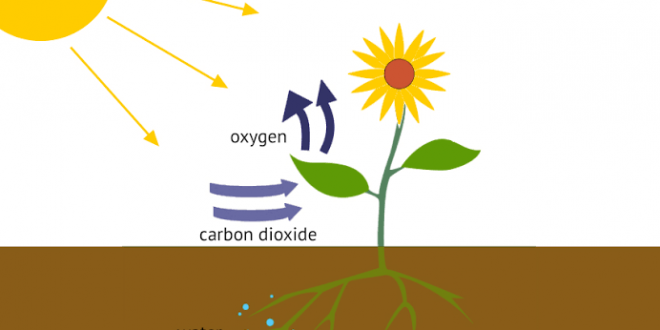
Photosynthesis is a process through which plants make their own food. This food not only feeds the plants, but also the other organisms that feed on these plants. To photosynthesize, plants need certain factors, without which the process is impossible. These factors are chlorophyll, light energy, and carbon dioxide. During the process, plants employ light energy to convert water and carbon dioxide into glucose and oxygen. Oxygen is released as a by-product. A small amount of oxygen is consumed by the plants for respiration, whereas most of the oxygen is released back into the air where other organisms including humans use it for respiration.
In this article, we will discuss all the three factors chlorophyll, carbon dioxide, and light energy in detail. But before discussing these factors, first, let us see the chemical equation of photosynthesis.
Carbon dioxide + Water  Sugar + Oxygen
The balanced chemical equation of the above reaction is given below:

Important Factors in Photosynthesis
1. Chlorophyll
Chlorophyll is a green pigment in plants that absorbs light energy to convert carbon dioxide and water into a sugar known as glucose. Some of the glucose is stored in the form of starch. Plants also produce oxygen as a byproduct during photosynthesis which is released in the air.
Chlorophyll has a green color; therefore, it absorbs the blue and red elements of the electromagnetic spectrum and reflects the green part of the spectrum. Chlorophyll is present in chloroplasts of the plant cells, especially in the spongy and palisade mesophyll cells.
The primary photosynthetic organ of the plants is their leaves. However, any part of the plant that has exposure to light will develop chlorophyll to carry out the process of photosynthesis. Leaves with more chlorophyll can absorb the light energy better for carrying out photosynthesis.
Investigating the Importance of Chlorophyll in Photosynthesis
Although plants produce glucose as a result of photosynthesis, however, leaves cannot be tested for the presence of glucose because it is used instantly by the plants, transformed to other substances, and stored as starch. Starch is stored in chloroplasts where the process of photosynthesis occurs. Due to these reasons, testing a leaf for starch is a more reliable indicator of the fact that the leaf is photosynthesizing.
Procedure
You can test the plant leaves for the presence of starch using the following procedure:
- Drop the leaf into boiling water to kill the leaf and stop all the chemical reactions. The leaf dies when it is boiled in water because boiling water kills its cells and breaks down its cell membranes.
- Put the leaf in hot ethanol for 5-10 minutes to eliminate the chlorophyll. This is done so that the color changes from iodine can be seen more visibly.
- Soften the leaf by washing it with water and spread it over a white tile
- Add iodine solution to the leaf from the dropping pipette
Result
After some minutes of dropping an iodine solution to the leaf, the parts of the leaf that have starch will turn blue or black.
Remember that ethanol used in this test is heated using a hot water bath. Ethanol boils at 78oC, so in a tube, it will boil when you put it in a beaker of hot water. Since ethanol is flammable, therefore this is the most reliable method to boil ethanol as compared to using Bunsen burner.
Variegated leaves contain green and white parts. The part that contains chlorophyll in variegated leaves is green and the part that does not contain chlorophyll is white. Only the parts of the leaf that contain chlorophyll, i.e., that was green will turn black or blue as a result of this test. This shows how important chlorophyll is for photosynthesis.
You can de-starch a plant by placing it in dark for some hours. Cover the parts of the leaves with dark paper and leave the plant in light for some hours. Only the parts of the plants which were not covered will become black or blue with the iodine solution which also shows how important light is for photosynthesis.
2. Light Energy
Light is also essential for carrying out photosynthesis. Decreasing the intensity of light results in a reduced rate of photosynthesis. Similarly, increasing the intensity of light increases the rate of photosynthesis. Due to this reason, during the night, the rate of photosynthesis decreases because no light is present.
Investigating the Importance of Light for Photosynthesis
Follow the procedure below to conduct a test that emphasizes the importance of light for photosynthesis:
- You need to de-starch the plant before beginning this experiment. You can do so by placing the plant in a dark cupboard for 24 hours.
- This is done to ensure that any starch that was present in the plant is used by the plant.
- After de-starching the plant’s leaf, cover it partially with an aluminum foil and place the plant in sunlight for one day.
- Remove the leaf and test it for starch using the iodine.
Result
The part of the leaf that was covered with aluminum foil will remain orange-brown because it did not get any sunlight and as a result was unable to photosynthesize. On the other hand, the part of the leaf that was exposed to sunlight will turn blue or black. This test proves that light is important for the photosynthesis and production of starch in plants.
3. Carbon dioxide
Plants also need carbon dioxide along with water to photosynthesize. They take carbon dioxide from the air. As the concentration of carbon dioxide increases, the rate of photosynthesis also goes up. However, at some point, carbon dioxide may be a limiting factor.
Investigating the Importance of Carbon dioxide
Follow the procedure below to conduct a test that emphasizes the importance of carbon dioxide for photosynthesis in plants:
- Before starting the experiment, de-starch the plant.
- Around one leaf of the plant, tie a clear bag that contains sodium hydroxide. This will absorb carbon dioxide from the surroundings.
- Around another leaf, tie a clear bag containing water that will not absorb carbon dioxide from the surroundings (control experiment).
- Put the plants in bright light for many hours
- Test both the leaves of the plants for the presence of starch using iodine.
Result
- The leaf from the bag that contains sodium hydroxide will remain orange-brown because it was unable to photosynthesize due to the absence of carbon dioxide.
- The leaf from the water bag (control experiment) will turn blue-black because it had all the essential things that were needed for photosynthesis.
Did you like this article? Rate it!


 Loading...
i like the article
Hi Sam! Thank you! Great to hear that you found this resource useful.
welcome
Hi Suunu! Thanks for reaching out. Hope you’ve found this resource useful 😊!
i have learnt a lot which i did not know
am senior three student but this is cool
Am impressed
Am impressed
learning is the best
I like this one